Perennials & Biennials
Showing 1–8 of 511 results
-
Acanthus spinosus Bear’s breeches Z 5-9
two-toned spikes of purple & lavender bracts
A WOW plant. Bodacious two-toned spikes of purple & lavender bracts, June to August. Even its leaves are attractive, glossy, deeply incised. Both flowers and leaves have thorny tips.
LIMITED QUANTITIES AVAILABLE, LIMIT OF 1 PER CUSTOMER PLEASE.
Size: 3-4' x 2-3'
Care: Sun to part shade in moist well-drained soil.
Native: Italy & TurkeyAcanthus means “thorn” and spinosus means “spine” referring to the leaves. Grown since at least 5th century B.C. Inspiration for Corinthian column capital in architecture of ancient Greece and Rome
-
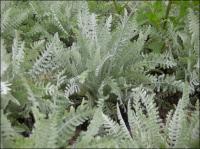
Achillea clypeolata Balkan yarrow
Erect, fern-like clumps of striking silver foliage. Mustard yellow platter flowers in summer.
OUT OF STOCK – EMAIL FOR AVAILABILITY
Erect, fern-like, thick clumps of striking silver foliage. Mustard yellow platter flowers in summer. I first saw this plant at the harbor garden in Port Washington about 6 AM one fall morning. The foliage was so arresting it stopped me in my tracks.
Size: 18" x 24"
Care: sun in well-drained to moist well-drained soil. Deer and drought tolerant
Native: BalkansCollected before 1804. The Balkan yarrow is known to attract butterflies with its Yellow Flowers.
-
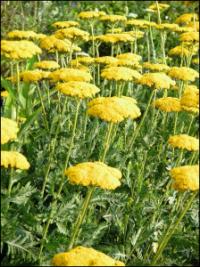
Achillea filipendulina Fernleaf Yarrow Z 3-9
June-July clumps of mustardy yellow platters on erect stems
June-July clumps of mustardy yellow platters on erect stems
Size: 3’-4’ x 30”
Care: Full sun. Dry, well-drained soil. Heat and drought tolerant, stands up to wind.
Native: Caucasus, Iran, Afganistan.
Wildlife Value: Deer resistant.Achillea named for Achilles, hero of Homer’s Iliad, used Achillea millefolium to stop bleeding of his wounded soldiers at the siege of Troy. Achilles learned about the uses of Achillea from Chiron, the Centaur. A. filipendulina collected by French explorer and botanist Joseph Tournefort (1656-1708) in the Levant c. 1700.
-
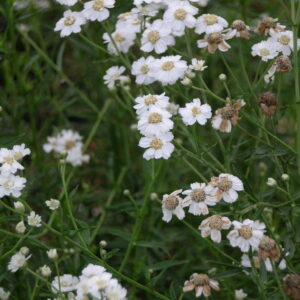
Achillea ptarmica ‘The Pearl’ Sneezewort, Shirtbuttons Z 3-9
Spring - summer frilly, white “shirtbuttons”
Spring – summer frilly, white “shirtbuttons”
LIMITED QUANTITES AVAILABLE, LIMIT OF 1 PER CUSTOMER PLEASE.
Size: 12-36”x 24”
Care: Full sun, well-drained to moist well-drained soil.
Native: North temperate regionsPtarmica is Greek for sneeze because this plant used for snuff. English brides carried this at their weddings and called the plant “Seven years’ love.” Cultivated in Europe since the Middle Ages and in the U.S. since the 1700’s. The double form grown in English gardens by 1597. Philip Miller (1768) referred to this as “double Maudlin.” “The Pearl” described in the May 1905 edition of The Garden as “probably giving more satisfaction than any other white-flowered hardy perennial. The Pearl is a pearl indeed.”
-
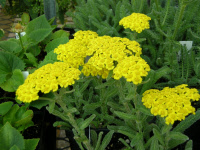
Achillea tomentosa Woolly yarrow Z 4-8
Lemony colored platter-like flower heads from June to July atop a spray of wooly foliage.
Lemony colored platter-like flower heads from June to July atop a spray of wooly foliage.
LIMITED QUANTITES AVAILABLE, LIMIT OF 1 PER CUSTOMER PLEASE.
Size: 8” x 12”
Care: Full sun in moist to dry soil
Native: Southern to Eastern Europe
Awards: Royal Horticultural Society Award of Garden Merit.Grown in garden of Tradescant the Elder’s (1570-1638) in 1630. ”A splendid plant with fern like foliage and rich golden-yellow flower heads.” H.H. Thomas, 1915. Philip Miller’s The Gardener’s Dictionary, describes this as having “finely cut” leaves with flowers “of a bright yellow colour, and continue long in beauty.” (1768)
Achillea named for Achilles, hero of Homer’s Iliad, who used a different Achillea to stop his soldiers’ bleeding at the siege of Troy. Tomentosa means “furry” or “covered in hairs”, referring to the leaves of this plant.**LISTED AS OUT OF STOCK BECAUSE WE DO NOT SHIP THIS ITEM. IT IS AVAILABLE FOR PURCHASE AT OUR RETAIL LOCATION.
-
Achlys triphylla Vanilla leaf, Sweet after death Z 5-9
A foot tall stem holds one large leaf divided into three, fan-shaped leaflets with deeply scalloped edges laying flat like a dinner plate. From spring to mid-summer an erect, white spike, not made of flowers, but made of stamens (the male part of plants that holds pollen) blooms.
A foot tall stem holds one large leaf divided into three, fan-shaped leaflets with deeply scalloped edges laying flat like a dinner plate. From spring to mid-summer an erect, white spike, not made of flowers, but made of stamens (the male part of plants that holds pollen) blooms.
Size: 8-16" x spreading by roots.
Care: shade to part shade in moist to moist well-drained soil
Native: mountains of the western US and Canadian coast up to nearly 5000’Natives of the Pacific Northwest used this medicinally to treat tuberculosis, cataracts, and induce vomiting, They also washed their hair with it and as an insecticide to repel or kill mosquitos, bedbugs and lice on sheep,
Both common names describe the sweet smell of its dried foliage. Collected by “Archibald Menzies on the west coast of North America.” Menzies (1754-1842) sailed on the Vancouver Expedition collecting many plants in 1787-1788. Cyclopedia or Universal Dictionary of Arts. Sciences, and Literature v. 20, p. (1812) where Sir James Edward Smith described and named it Loentic tripylla means Lion’s-leaf. Tripylla means three fruits. Renamed later. -
Acinos alpinus syn. Calamintha alpina syn Clinopodium alpinus
Reddish purple flowers all summer and fall
OUT OF STOCK
Reddish purple flowers bloom on cushions all summer and fall – “long and late season of bloom.” Foster
Size: 4-6”x 8”
Care: sun in well-drained soil
Native: European mountains - Alps and PyreneesCollected before 1753.
Common name for its aromatic foliage. It has been used to reduce excessive sweating and fever. Also, leaves may be brewed for tea. -
Aconitum napellus Monkshood Wolfsbane Z 5-8 POISON
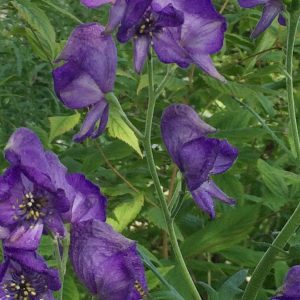
Striking, late summer to fall tall stalks, top third covered with flowers, blue washed purple each topped with a hood, in ancient times like a monks’ hood, today like a sweatshirt’s hoody.
OUT OF STOCK
Striking, late summer to fall on the top third of tall stalks, covered with flowers, blue washed purple each topped with a hood, in ancient times like a monks’ hood, today like a sweatshirt’s hoody.
Size: 2-3’x 12”
Care: part shade, cool, moist soil
Native: Europe
Wildlife Value: Aconitums are unusual. They change sex, which, in turn increases procreation! When first blooming they have a “male phase” of about 5-6 days when pollen is available, and the plant produces more nectar and stronger scent. Then the male parts wither making the pollen available to the female parts. The pollen is toxic to bees so most avoid it leaving more for the female parts, therefore increasing fertilization. However, bees are able to collect nectar without harm. https://botany.one/2019/11/aconitum-offers-bees-more-nectar-to-carry-its-toxic-pollen/ Also deer resistant.
Awards: Elisabeth Carey Miller Botanical Garden Great Plant PicksThe name Aconitum is from the mythical hill Aconitus in Pontica where Hercules fought with Cerberus. The Monkshood reputedly sprang from the jaws of Cerberus, the guard dog of the underworld. Believed to make a potion that helped witches fly. Identified by Dioscorides in De Materica Medica for medicinal use c. 70 A.D. Philip Miller in The Gardener’s Dictionary (1768) wrote that the name Aconitum comes from Greek word for dart “because the Barbarians used to daub their darts therewith.” Used by physicians in 1200’s and to poison wolves: “This Wolf’s bayne of all poisons is the most hastie poison.” Wm. Turner, 1560’s. Called Monkshood due to the shape of each flower like a monk’s hood. Introduced to the new world by John Winthrop in 1631.